

புத்த மதம் எப்படித் தொடங்கியது
The Story of Siddhartha Gautama and the Teachings of Buddha
The Story of Siddhartha Gautama
Siddhartha Gautama was born in the southern region of present-day Nepal in the sixth century BC. According to Buddhist tradition, a holy man foretold that the young prince would one day become either a powerful ruler or a spiritually awakened teacher. Determined to protect him from hardship, Siddhartha’s father surrounded him with wealth, pleasure, and privilege, keeping the realities of suffering far from his son’s world.
But at age twenty-nine, Siddhartha ventured beyond the palace walls and encountered what his sheltered life had hidden from him: sickness, old age, and death. Deeply shaken by what he saw, he left behind his position, family, and comfortable life in search of an answer to human suffering.
For the next six years, Siddhartha lived as a wandering ascetic, embracing severe self-denial and devoting himself to meditation. Yet despite his rigorous practices, he found no lasting solution to the suffering he sought to overcome.
According to tradition, Siddhartha eventually sat beneath a bodhi tree near present-day Gaya, India, determined not to rise until he had attained enlightenment. After persevering through temptation and distraction, he believed he had discovered the ultimate truth. From then on, he was known as the Buddha, meaning “Awakened One.” He spent the remainder of his life teaching others the path he believed could lead them beyond suffering.
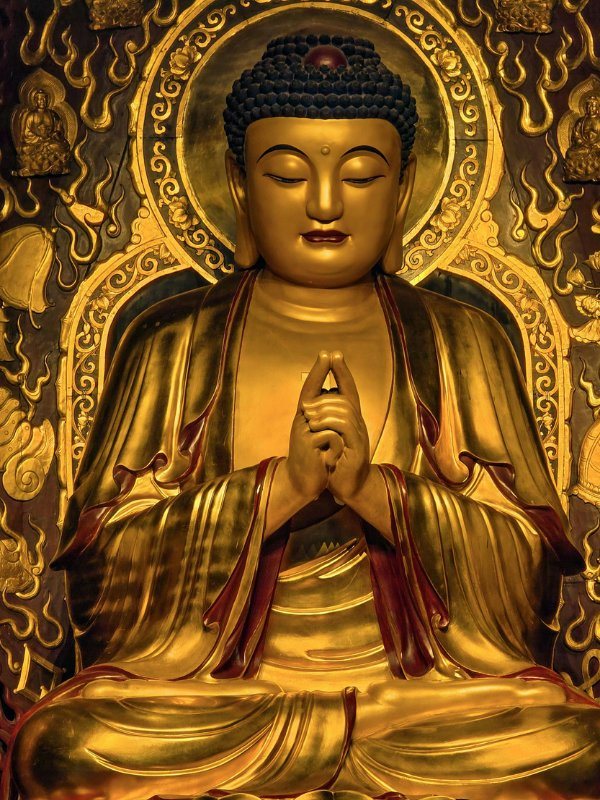
தர்மம்
At the heart of the Buddha’s teaching are the Four Noble Truths: suffering is an unavoidable part of life; suffering is rooted in desire and ignorance; suffering can come to an end; and the way to overcome it is through the Middle Way, expressed through the Noble Eightfold Path.
Within this teaching is the belief that desire itself is ultimately a source of suffering, whether the object of desire is considered good or bad. Buddhist practice therefore seeks to extinguish desire and reach nirvana, understood as release from suffering and from the continuing cycle of birth, death, and rebirth.
Rather than seeking communion with a personal God, the ultimate goal in this framework is liberation through awakening and the extinguishing of desire.
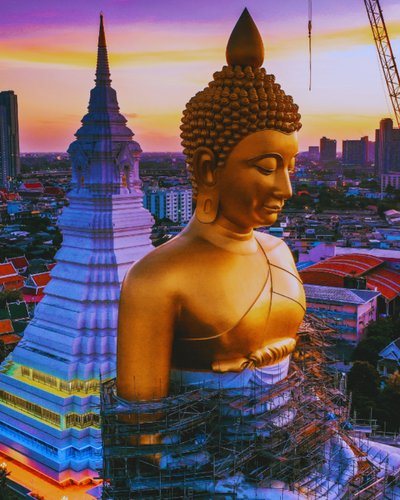
A Cultural Framework Woven into Everyday Life
Buddhism looks different across cultures and communities. In many parts of the world, it functions not simply as a defined system of belief but as a cultural framework woven into everyday life. Local customs, festivals, social values, and spiritual traditions may blend with Buddhist teachings and practices.
In some communities, Buddhist practice exists alongside ancestor veneration, including rituals that involve seeking the help or guidance of deceased relatives, as well as other spiritual practices. For many followers, everyday religious life centers on making merit through acts believed to bring spiritual benefit, such as giving, honoring religious figures, supporting monks, or participating in religious ceremonies.
Buddhism has three major streams. While they share foundational teachings, each has developed distinct beliefs and practices shaped by different cultures.
Theravada
Focus: Personal discipline, meditation, ethical living, and awakening. Theravada closely follows the Pali Canon and is prominent in Myanmar, Thailand, Cambodia, and Laos.
Mahayana
Focus: Liberation from suffering for oneself and others. Mahayana traditions honor the Buddha and other enlightened beings and are widespread in China, Japan, Vietnam, and Korea.
Vajrayana
Focus: Ritual, symbolism, chanting, meditation, and visualization. Vajrayana includes Tibetan and Shingon Buddhism and is prominent in Tibet, Bhutan, Nepal, and Mongolia.
Buddhist Communities Around the World
| நாடு | Population 2024 | Buddhist Population | Percentage |
|---|---|---|---|
| சீனா | 1,425,000,000 | 230,000,000 | 16.1% |
| ஜப்பான் | 123,900,000 | 69,500,000 | 56.1% |
| தாய்லாந்து | 71,600,000 | 61,200,000 | 85.5% |
| வியட்நாம் | 100,300,000 | 49,000,000 | 48.8% |
| மியான்மர் | 55,300,000 | 41,200,000 | 74.5% |
| இலங்கை | 22,200,000 | 15,100,000 | 68.0% |
| கம்போடியா | 17,100,000 | 14,700,000 | 86.0% |
| South Korea | 51,600,000 | 12,800,000 | 24.8% |
| இந்தியா | 1,430,000,000 | 10,200,000 | 0.7% |
| Taiwan | 23,500,000 | 6,200,000 | 26.4% |
| அமெரிக்கா | 335,000,000 | 4,600,000 | 1.4% |
| லாவோஸ் | 7,700,000 | 4,100,000 | 53.2% |
| நேபாளம் | 30,500,000 | 3,900,000 | 12.8% |
| மங்கோலியா | 3,500,000 | 2,000,000 | 57.1% |


 Tamil
 English (United States)
 Afrikaans
 Arabic
 Bengali
 Chinese
 Dutch
 English (UK)
 Finnish
 French
 German
 Gujarati
 Hindi
 Indonesian
 Italian
 Japanese
 Kannada
 Khmer
 Korean
 Malay
 Marathi
 Nepali
 Panjabi
 Pashto
 Persian
 Portuguese
 Romanian
 Russian
 Spanish
 Swahili
 Telugu
 Thai
 Urdu
 Vietnamese